The situation
Hannibal had already destroyed two Roman armies after crossing the Alps. Rome answered by raising the largest army it had ever put in the field, under two consuls who shared command on alternate days.
The decision
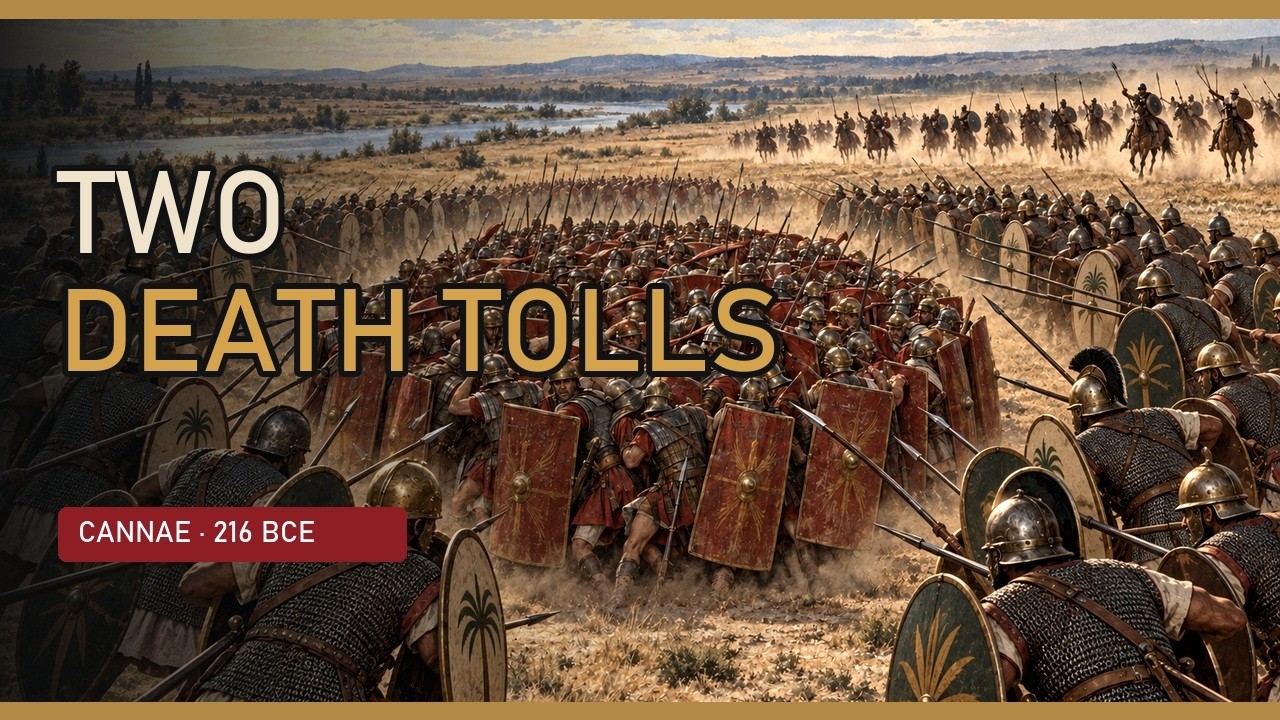
On the plain near Cannae the Romans packed their infantry into a deep, narrow formation, planning to smash through the Carthaginian centre by sheer weight.
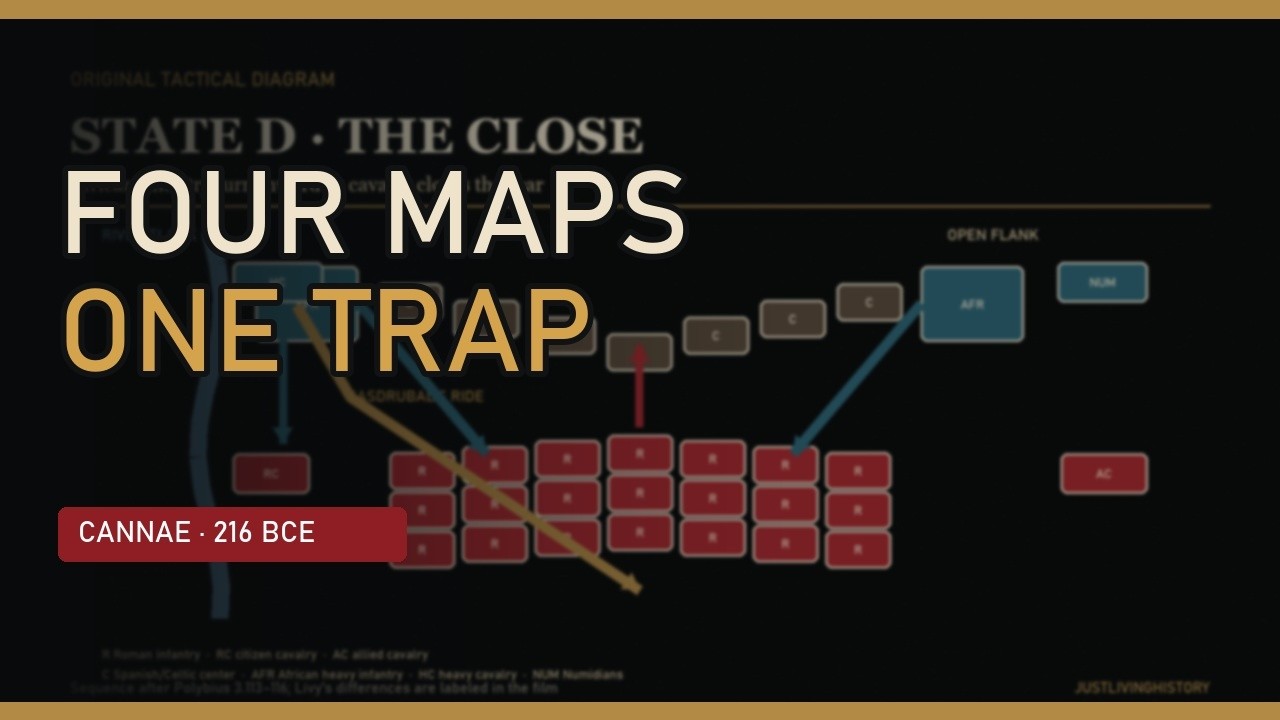
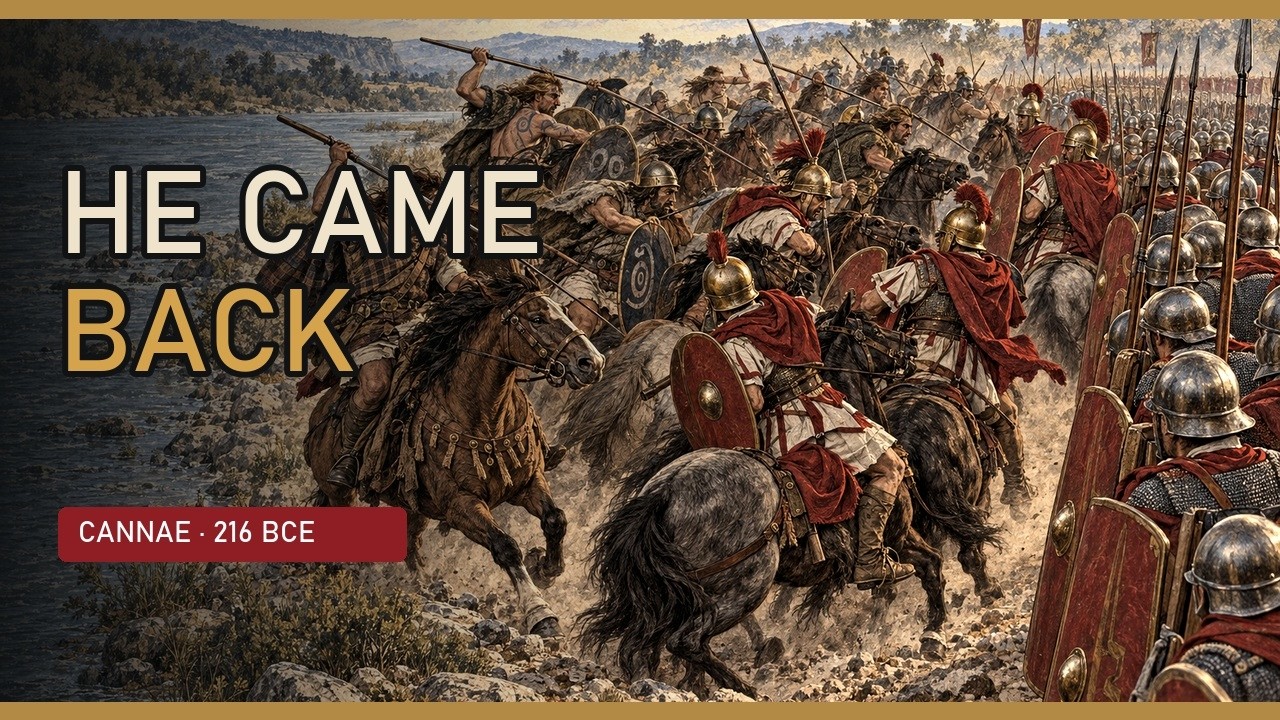
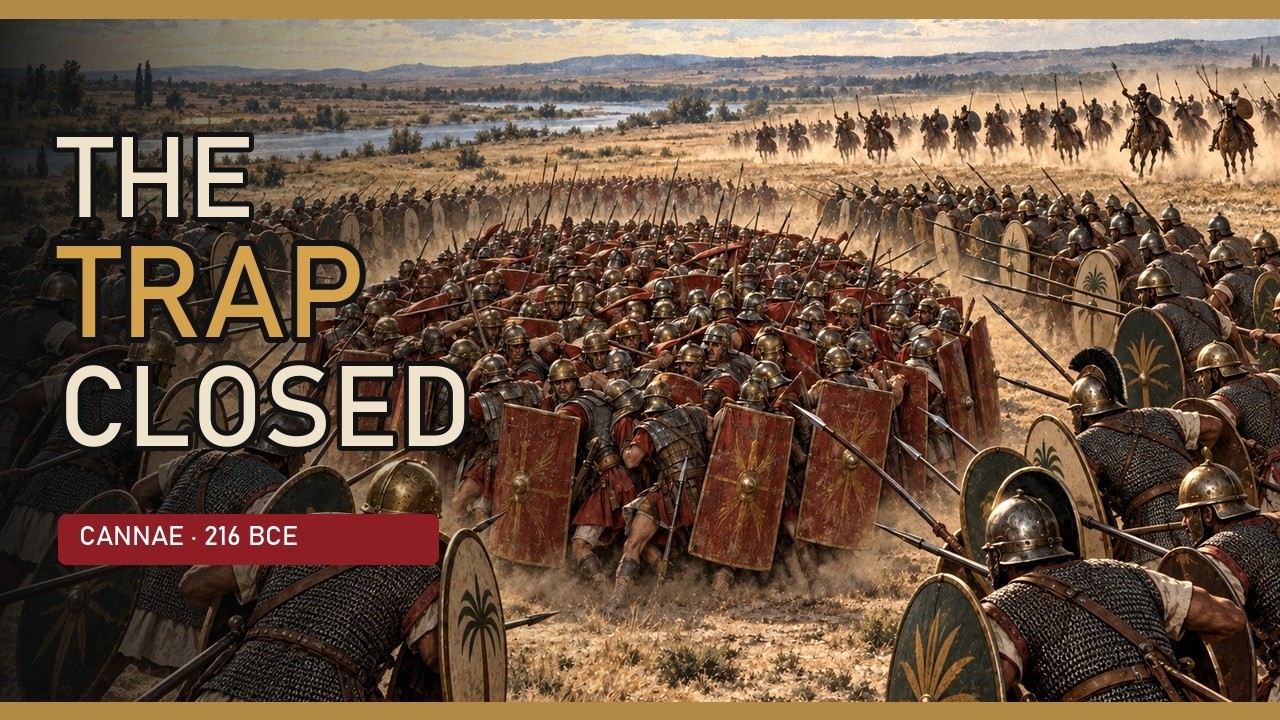
Hannibal arranged his weaker centre in a forward-bulging crescent and held his best African infantry back on the wings. As the Romans pushed, the crescent bent backwards without breaking, drawing them deeper in. Hannibal's cavalry drove the Roman horse from the field, then swung around to hit the Roman rear.
What it cost
The Roman army was surrounded and crushed. Ancient sources give losses of around 50,000 or more in a single afternoon, among them consul Lucius Aemilius Paullus. Yet Rome refused to negotiate, rebuilt, and avoided another pitched battle with Hannibal in Italy. Cannae shows how a tactical masterpiece can still fail to win a war.
Watch
Episodes that cover this
 2:16
Why Hannibal Won Cannae but Didn't Win the War
 2:11
How Many Romans Died at Cannae? The Sources Disagree
 2:07
The Battle Map That Explains Cannae
 1:58
What Rome's Commanders Could See—and What They Couldn't
 2:02
The Cavalry Move That Closed the Trap at Cannae
 2:08
Why Hannibal Let His Center Bend Backward
 2:02
The Roman Army Walked Into Hannibal's Trap at Cannae
 20:06